


.svg)

.svg)
.svg)
.svg)




.svg)
.svg)
.svg)




.png)
.svg)


Is FOOH a revolution for brands?

The FOOH (3D Out Of Home), in other words, 3D outdoor advertising, has changed the advertising world with spectacular displays that seem to come off the screen. Brands use it to stand out in a saturated advertising universe, where capturing the attention of consumers becomes a real challenge. With immersive and hyper-realistic campaigns, FOOH has succeeded in redefining what advertising engagement is. Let's explore this trend in depth and see how it is transforming the current marketing landscape.
How does FOOH defy reality?
FOOH technology creates an illusion of depth and movement, making images projected on giant LED screens extremely realistic. These 3D visuals give the impression that objects are coming off the screen, floating in the air, or interacting directly with the urban environment. This technology takes advantage of both perspective angles and sophisticated lighting techniques to create captivating optical illusions.
Outstanding examples of FOOH
1. L'Oréal: Redefining beauty with FOOH
L'Oréal used FOOH to promote its line of skin care products by creating an immersive 3D campaign. On giant screens, the brand's products seemed to leave the screen and move into the surrounding space, creating a breathtaking sensory experience. L'Oréal has been able to use this technology to reinforce the high-end image of its brand while captivating passers-by in busy urban environments. The campaign wasn't limited to static images: it also showed smooth animations of products interacting with natural elements, symbolizing organic ingredients and the purity of formulas.
This approach allowed L'Oréal not only to attract attention, but also to generate a virality online, with viewers filming the ads to share them on social networks. The combination of visual immersion and advertising has created a lasting impact, consolidating L'Oréal's position as an innovative leader in the beauty sector.
2. PlayStation: A total immersion in the game
PlayStation also took advantage of FOOH technology to promote the launch of its new console, PlayStation 5. In a campaign deployed on urban screens, PlayStation created 3D visuals where consoles and controllers seemed to come out of the screens, projecting light rays and special effects inspired by the video game universe.
The impact of this campaign did not stop at outdoor displays. The surprise effect and the realism of the animations prompted passers-by to record and share the experience online, generating millions of views on social networks. PlayStation has thus strengthened its connection with the gaming community by showing that its innovation was not limited to consoles, but also extended to the way it communicated with its users.
Why is FOOH so powerful for brands?
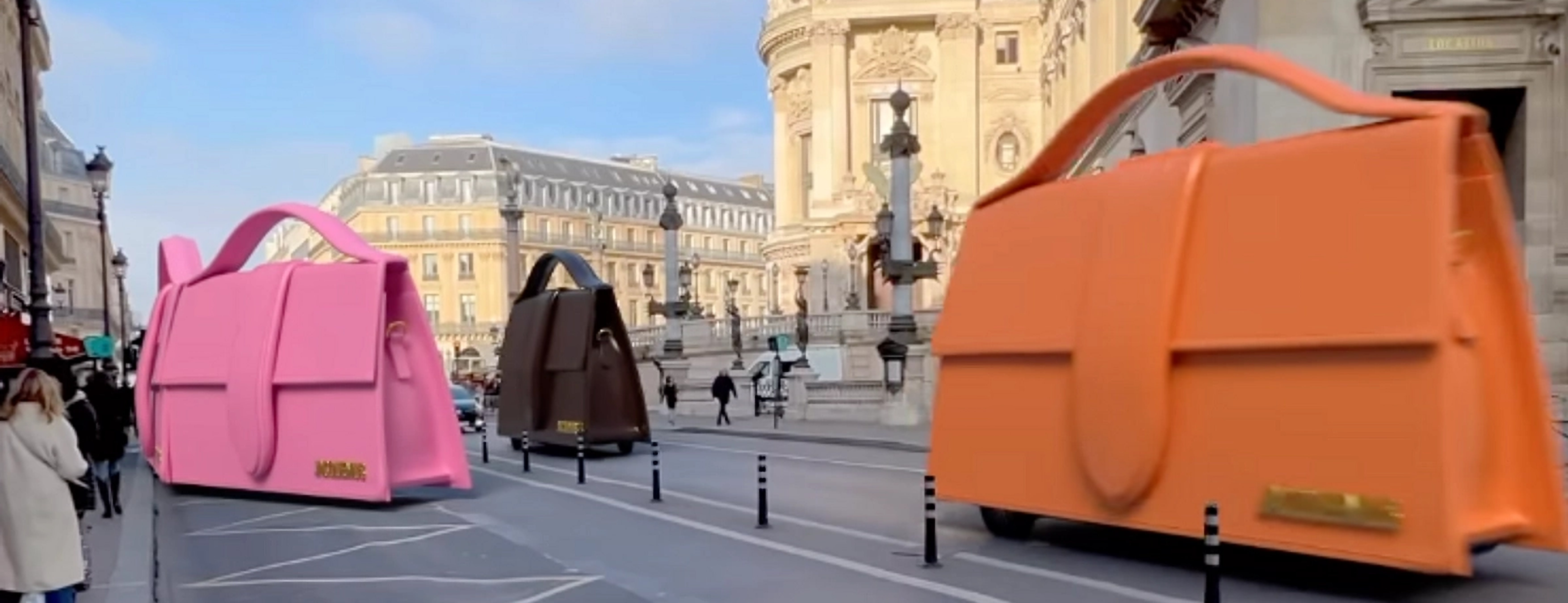
1. Creating an unforgettable visual impact
Unlike traditional billboards, FOOH campaigns don't just show a static image. They offer a dynamic and interactive visual experience that instantly captures the attention of passers-by. By using 3D, these ads break the line between reality and illusion, leaving a lasting impression. Brands like Puma used this technology to transform products into animated characters, creating surreal scenes where the shoes seemed to dance and interact with the audience.
2. Campaigns designed to be viral
The power of FOOH also lies in its ability to create viral experiences. Viewers, impressed by the optical illusion and visual immersion, are encouraged to film and share the experience on their social networks. This natural virality multiplies the effect of the campaign. netflix For example, used this technique to promote series by projecting 3D visuals that instantly captured the attention of passers-by and generated thousands of online views.
In the following, we will further delve into the emotional and psychological impact of FOOH on consumers and explore the ways in which this technology directly influences the memorability of brands and their advertising message.
The emotional impact of FOOH on consumers
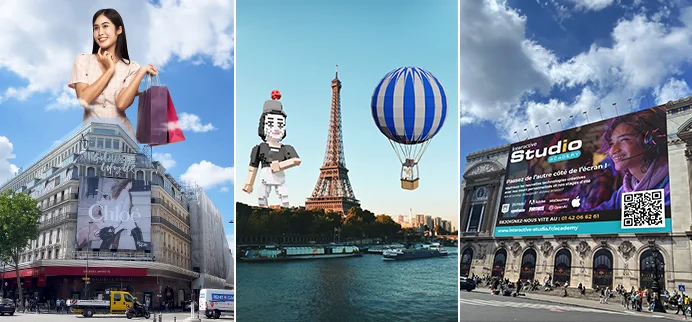
The FOOH does not just capture visual attention: it generates a emotional reaction in the spectator. 3D technology, by offering an immersive experience, allows brands to create an immediate emotional connection with the public. Indeed, optical illusions, realistic animations and 3D movement arouse surprise and wonder, which amplifies the impact of the advertising message.
1. Creating a strong emotional connection
When consumers are exposed to FOOH advertising, they are transported to a new dimension where the product or brand becomes an integral part of their immediate reality. This immersion creates a stronger emotional connection, because the viewer doesn't just see the ad, they Vit. Brands like Samsung, for example, used 3D visuals to highlight new technological products, which not only generated curiosity, but also a powerful emotional interaction, thus increasing product recall.
2. Increased memorability
Psychological research shows that the more immersive and emotionally engaging an experience is, the more memorable it is. The FOOH, by creating multisensory experiences, capitalizes on this approach, which allows brands to strengthen the retention of the advertising message. In a world where consumers are constantly solicited by advertising, standing out through emotion has become essential. Campaigns like those of lamborghini, projecting hyper-realistic cars onto giant screens, showed how this technology can transform the perception of a brand, making it more impressive and more memorable.
FOOH: a new tool for personalized communication

One of the underlying strengths of FOOH is its ability to adapt to data and deliver ads. contextually relevant. With innovations such as artificial intelligence and consumer behavior analysis, FOOH can go beyond the visual aspect to create personalized campaigns in real time.
1. Real-time and dynamic advertising
Thanks to the integration of smart sensors and technologies like AI, brands can adapt ad content based on the time of day, weather, or even the demographics of passers-by. For example, an apparel brand could display a specific collection when it starts to rain, or an energy drink company could adjust their messaging to match a local sporting event.
2. Improving targeting
FOOH is not limited to mass distribution. With data analysis, it is possible to target specific audiences according to their location and their behaviors. This allows brands to adapt their message according to the audience that comes in front of the billboard. This personalization reinforces the engagement and relevance of the advertising message, which is crucial in an environment saturated with content.
In the final part, we will discuss the technical and financial challenges of FOOH as well as the future prospects for this innovative technology in the advertising field.
The technical and financial challenges of FOOH

Although FOOH represents a major advance in outdoor advertising, it is not without challenges, especially in terms of costs and technical complexity. For this technology to reach its full potential, brands need to be ready to take on certain obstacles.
1. High production and installation costs
Creating a FOOH campaign requires a significant investment. Unlike traditional 2D advertising, FOOH requires specialized skills in 3D modeling, high-resolution screen technologies, and often specific infrastructures to support immersive advertising. These elements increase production costs considerably. For brands with limited budgets, this can be a hindrance, especially if the objective is to deploy these campaigns on several urban locations. For example, the screens used for FOOH need to be calibrated to display 3D visuals from multiple angles, and maintaining them requires specialized technicians.
2. Technical complexity
Setting up a FOOH ad also requires a complex coordination between creative and technical teams. It is crucial that 3D animations are adapted to the physical space in which they are projected. An error in perspective or angle of view can easily break the optical illusion and reduce the effectiveness of the campaign. In addition, these campaigns must be carefully synchronized with the surrounding conditions, such as light or traffic density, to ensure optimal visibility. For this reason, only agencies or brands with solid expertise in 3D and a good mastery of advertising technologies can maximize the potential of these displays.
3. Regulations and restrictions
Many cities require strict regulations concerning the use of digital screens for outdoor advertising. In some cases, these screens can be considered visual disturbances, especially if they interfere with traffic or the urban landscape. Brands should therefore ensure that they comply with local outdoor advertising laws before deploying a large-scale FOOH campaign.
The FOOH: Towards widespread adoption?
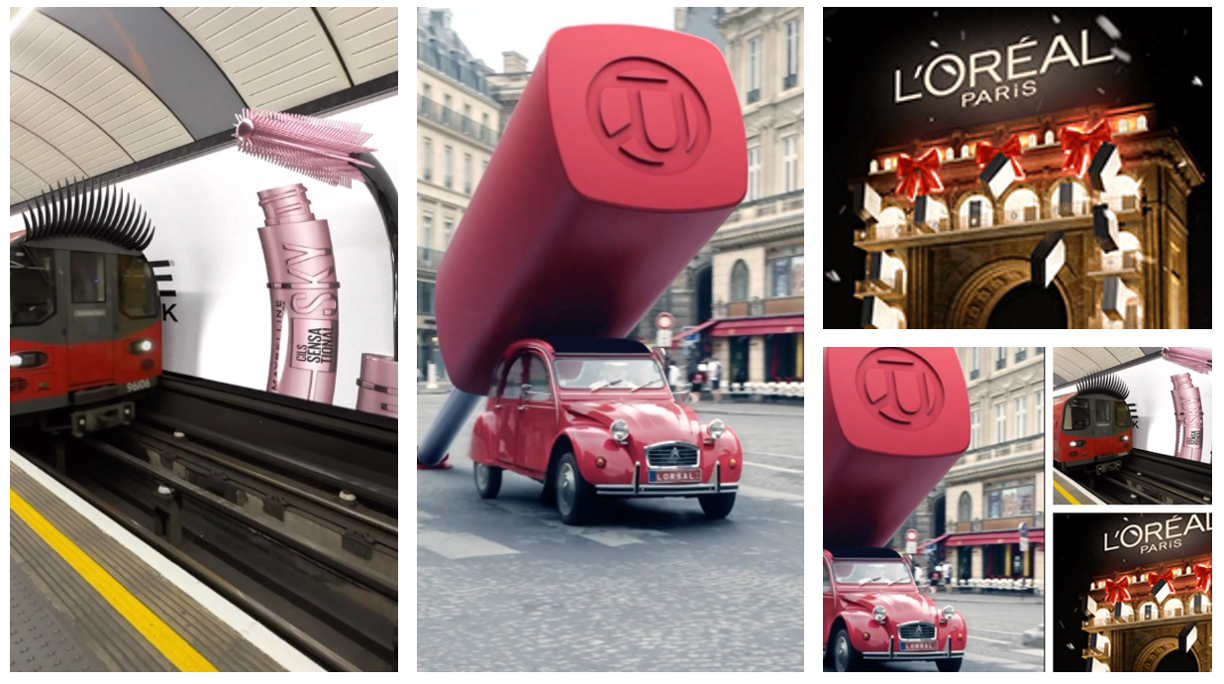
Despite these challenges, FOOH's potential to transform outdoor advertising is immense, and current trends show that this technology could become increasingly accessible as costs fall and infrastructure improves.
1. Decrease in technology costs
As LED screen technology and 3D modeling software continue to develop, production costs for FOOH campaigns could decrease. In addition, the rise in power ofartificial intelligence And of themachine learning could make it possible to create dynamic ads in real time, without requiring a workforce as specialized as today. This would offer brands of all sizes the opportunity to take advantage of this new advertising format.
2. Impact on the brand-consumer relationship
FOOH has the potential to redefine how consumers interact with brands. By creating advertising experiences that literally go beyond the frame of the screen, brands can create a more direct, immersive, and memorable relationship with their audience. It also reinforces the customer loyalty, especially in a context where consumers are increasingly looking for unique and engaging experiences.
Conclusion: A promising future for outdoor advertising
FOOH represents the future of outdoor advertising, merging the power of 3D technology with the urban environment to create immersive and unforgettable advertising campaigns. Although it presents challenges in terms of costs and technical complexity, its potential to capture consumer attention and generate natural virality makes it an indispensable tool for forward-thinking brands.
As technologies advance and costs decrease, FOOH could become a standard in outdoor advertising. Brands that adopt this technology now will have a competitive advantage, capturing the attention of an audience looking for visual experiences that go beyond traditional advertising.
The future of FOOH is bright, and it would not be surprising to see these 3D advertising campaigns becoming ubiquitous in urban centers around the world, transforming the way we perceive and interact with ads.








.svg)