.svg)

.svg)
.svg)
.svg)




.svg)
.svg)
.svg)




.png)
.svg)


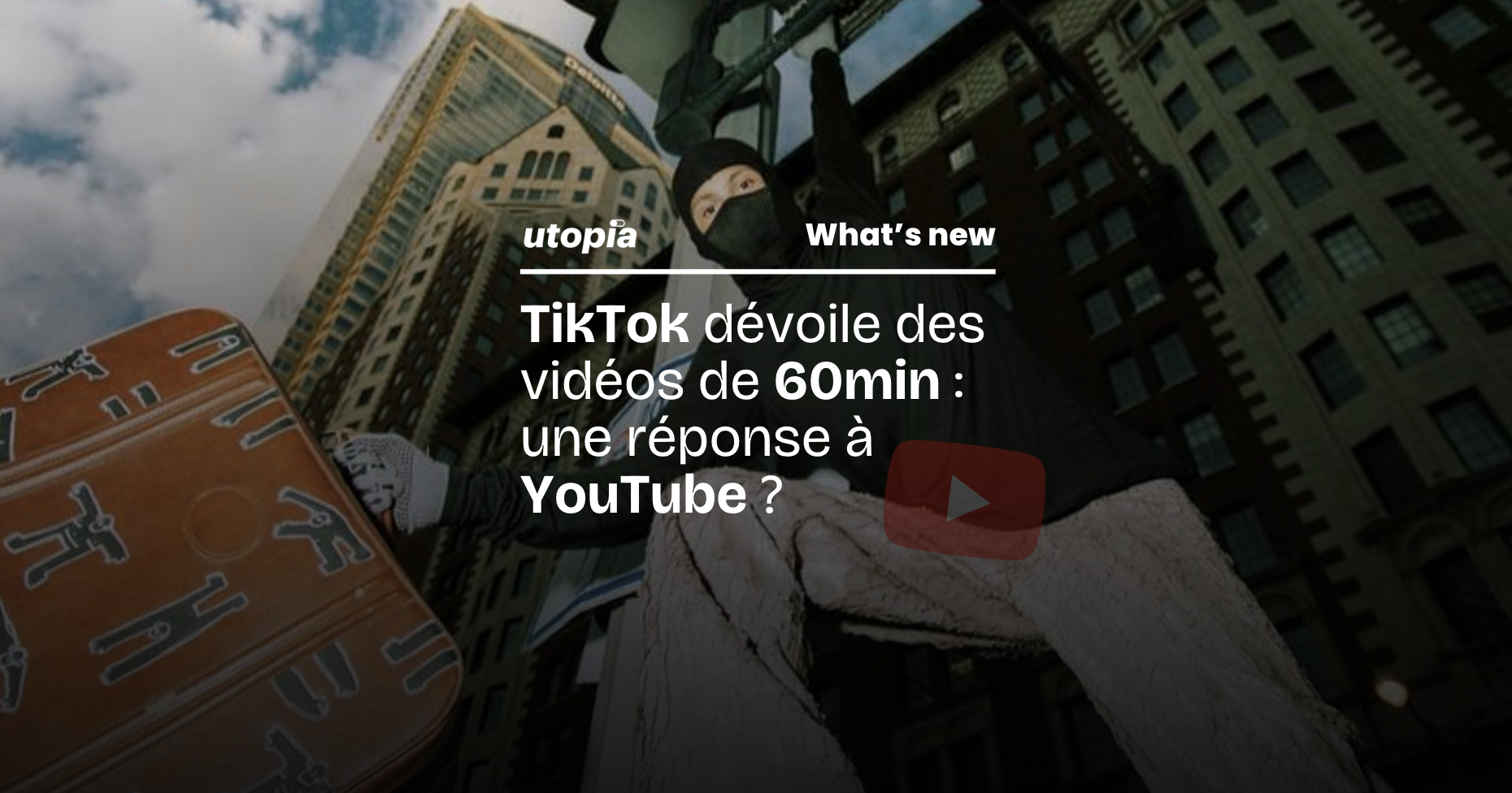
TikTok reveals 60-minute videos: an answer to YouTube?
What if you chose to blow everything up on TikTok? Choose your TikTok agency now!
TikTok, you probably know him for his short viral videos of 15 to 60 seconds. But there you go, in May 2024, the platform decided to shake up the rules: it is now testing videos of a maximum duration of 60 minutes. This new feature is still only available to a lucky few, but it sends a strong message: TikTok wants to play in the big leagues and especially position itself in the field of long-form videos, traditionally dominated by YouTube.
With this format, there is no need to limit yourself to a few seconds to captivate the audience. Now, the opportunity to explore richer content opens. Of more detailed product demonstrations, in-depth tutorials, or even mini-documentaries become possible, without the constraint of time. You might think that this new feature marks a break with the initial DNA of the platform, but this new flexibility could redefine the experience for creators and brands.
However, the question remains: Can TikTok really compete with YouTube in this area? YouTube has built its reputation on the quality and depth of long-form content, but TikTok, with its million active users, seems ready to take on the challenge. This turning point could offer new perspectives, both for designers and brands, eager to stand out with immersive and captivating formats.
Impact of long-form videos on user and creator engagement on TikTok
The move to longer videos on TikTok is changing engagement on the platform. Traditionally, TikTok users are used to consuming short, fast-paced content. But with the introduction of videos that can last up to 60 minutes, commitment is now being played out on another ground: that of retention.
For creators, it's an opportunity to release short formats and build deeper content. Of course, you have to know how to keep your attention for several minutes, but those who succeed see their audience become more loyal and engaged. By investing more in these long-form videos, users connect more strongly with the creator, which strengthens this relationship.

image source: wave.video
In summary, TikTok offers creators a wider playing field to retain and engage their community. It's a real change in engagement dynamics, and everyone wins when the content is well thought out.
TikTok vs YouTube comparison
Differences in strategy and audience
YouTube remains the undisputed champion of long-form content. With its well-established horizontal format, the platform has attracted independent creators as well as big names in cinema and television. This is where you can find everything: trailers, series, and even feature films. YouTube has established itself as THE reference for anyone who wants to produce and consume videos in depth, without time limits.
TikTok, on the other hand, was built on short, powerful and vertical videos. But with the arrival of long videos, TikTok is getting closer to YouTube. This evolution allows the platform to keep its creators — those who might be tempted to switch to YouTube to create longer content. And that's not all: TikTok is now eyeing To the film industry. Vertical streaming is booming there, but the time limit, until recently, often meant that videos had to be split into several parts. Not great for a really smooth experience.
TikTok bets on the horizontal format
To go even further, TikTok encourages creators to experiment with the horizontal format, a format that made YouTube successful. Last January, TikTok even proposed a Visibility boost for 72 hours for those who posted landscape videos that were longer than one minute in length. The idea? Attracting a wider audience and offer videos that are more similar to what you can find on YouTube. Of course, the application is not yet completely optimized for the horizontal, but the intention is there: TikTok wants to offer more flexibility to its creators and appeal to those looking for more than fast content.

image source: Threads
Strengths and weaknesses of long-form videos on TikTok
On the one hand, TikTok excels in interaction : creative effects, duets, music, everything is designed to maximize engagement. Even on long videos, these tools allow creators to maintain a strong connection with their audience. By playing on this interactive dynamic, some creators succeed in transforming their content into immersive experiences, even over several minutes.
The real challenge for TikTok is to keep users' attention on longer videos, especially when the platform is known for its fast and powerful side. TikTok is a trend-setting machine, but its audience is used to scrolling in seconds. Switching to one-hour videos is a big change! It requires creators to completely rethink their approach, and users to adapt at a much slower pace.
Other weakness to watch out for : the user experience for the horizontal format is not yet fully developed, especially for long videos. TikTok strongly encourages its creators to get started, but the platform still needs to improve this experience to make it as fluid and immersive as on YouTube. It is an important challenge to take up.
Despite these challenges, the potential is huge. If TikTok manages to adjust its interface and retain its users with longer videos, the platform could not only keep current creators, but also attract new talent, including in the cinema sector. It's a bold bet, but well executed, TikTok could redefining engagement around long-form content while keeping this side interactive and fun that makes it successful.
Monetization and opportunities for creators
New models for monetizing videos on TikTok
The arrival of long-form videos on TikTok opens new doors for creators, especially by Monetization material. Until now, monetization on TikTok was mainly done via brand partnerships, livestreams with donations and the creator fund. But with the benefits of 60-minute videos, the opportunities are multiplying.

TikTok can now do better integrate ads into long videos, a model more similar to that of YouTube. Creators thus have the possibility to insert several advertising segments into their content, thus increasing their income potentials. Plus, with more immersive and engaging videos, creators can capture the attention of advertisers looking to promote their products in a more subtle and narrative way.
Opportunities for brands
For brands, long-form videos represent a new playing field. They can now collaborate with creators to produce more in-depth content whether it's tutorials, product demonstrations, or even mini-series. This approach makes it possible to build a stronger relationship with the audience, by offering useful and engaging content rather than traditional and intrusive ads.
Is TikTok a serious competitor to YouTube?
By testing 60-minute videos, TikTok is venturing into a field that is still little explored by its users. This evolution could well be a game changer, provided the platform overcomes engagement and user experience challenges. But one thing is clear: TikTok isn't just looking to compete with YouTube, it wants to offer a more modern and more interactive alternative to long-form content. The potential is huge, and if TikTok plays its cards right, it could revolutionize online video consumption trends.



.svg)